F. Scott Fitzgerald’s novel, “The Great Gatsby”, is the evisceration of the American Spirit. In ways both subtle and blatant Fitzgerald ridiculed the American Dream, positioning a knife at its very heart. For the author, American society has decayed into chaotic materialism and the country has taken this American Dream with it. The events of the story are remarkable, seething with Fitzgerald’s distaste at the country around him. Every character in “The Great Gatsby” is truly deplorable and the worst of them escape entirely unscathed. In authoring this brief 200-words novella, Fitzgerald reflected on the America of his age and predicted the America to come. The book is filled with false prophets but it is Fitzgerald himself who emerges as the true psychic. By contemplating “The Great Gatsby” and its context, we can discover uncomfortable truths about the past and present of America and the American Dream.
The American Dream
Of course, before we see how Fitzgerald dismantled it, it would do well for us to identify the American Dream itself. This term, “The American Dream”, was not actually coined until the early 1930s, about 7 years after Fitzgerald wrote “The Great Gatsby”. But the myth, the narrative, had existed for centuries without a tidy name. The American Dream is said to be the greatest dream for the individual.
It tells us that even those born at the bottom may rise up to the pinnacle of society. They can own a house, impact a nation and move mountains. This is usually achieved through some combination of tenacity, talent, optimism, and grit. For Fitzgerald, this has all decayed into a propaganda. It was a former truth, long distorted by the realities of American society. To come to his conclusion, Fitzgerald simply examined the world around him. Now, Fitzgerald was not a philosopher or a social critic. He was a writer of fiction, so rarely has he expressed this disdain in a pointed, non-fictional way. But if we examined the cultural climate of his time and the works Fitzgerald studied, we can see how the author reached his rather pessimistic conclusion.
Fitzgerald wrote “The Great Gatsby” in the early 1920s, at a time of economic revolution in America. After the first World War, the US economy fell into a depression. Unemployment rose to nearly 12% in 1921. The price of crops surged to problematic, unattainable highs. But these economic woes swiftly turned around. Unemployment dropped to 2.4% by 1923, the nation’s GDP increased by 40%, annual income per capita surged by 30%. The scholar Robert A. Divine has said: “The American people by the 1920s enjoyed the highest standard of living of any nation on Earth.” In the early 20s, the American economy grew by 7% per year with the country responsible for 50% of the world’s industrial output.
Amidst time like these, the American Dream was alive as ever, but Fitzgerald and his contemporaries perceived danger. The author Oswald Spangler published a book called “The Decline of the West” in two volumes from 1918 to 1922. Read today, the book is massive, confounding and provocative to the point of being self-indulgent. It is at best a bore, and at worst, vaguely racist. But it was a product of its time, and indeed it became one of the most influential works in the era. Fitzgerald once wrote in a letter: “I read Spengler the same summer I was writing The Great Gatsby and I don’t think I ever quite recovered from him.” We cannot say with certainty which portion resonated so intensely with Fitzgerald, but the overall narrative of the Western decomposition sits at the heart of “The Great Gatsby”. Spangle wrote: “As soon as the market has become the town, it is no longer the question of mere centers for streams of goods traversing a purely peasant landscape, but of a second world within the walls”…; ”The true urban man is not the producer…He has not the inward linkage with soil or with the goods that passed through his hands.”;
“He does not live with these, but looks at them from outside and appraises them in relation to his own life-upkeep…”; “In place of thinking with goods, we have, we have thinking with money.”
This idea of thinking with money is crucial to “The Great Gatsby”, but it is like clothing the book wears at the sole of Fitzgerald’s novel we have a more profound disillusionment with the American Dream. With that in mind, it is time to begin our investigation in earnest.
The “Greatness” of Gatsby.
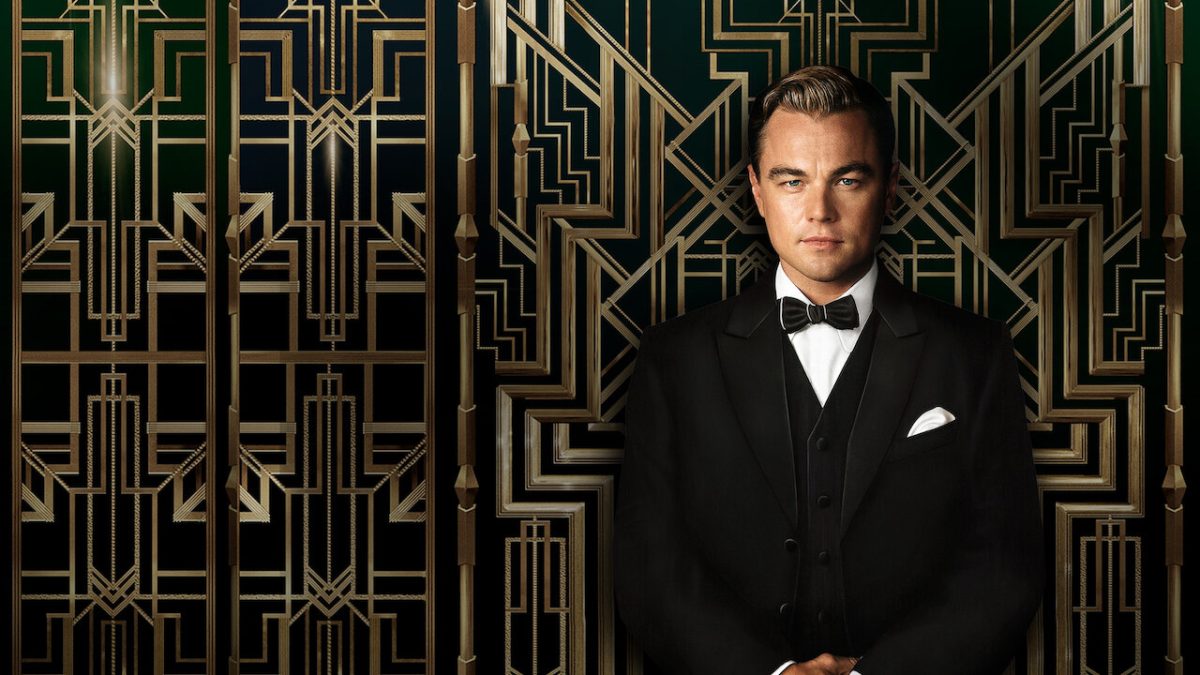
Narrated by a man named Nick Carraway, “The Great Gatsby” follows its titular character Jay Gatsby. Born impoverished, Gatsby pursues a romantic and idealized life which is represented by his ostensible love for a wealthy young woman named Daisy. Essentially, Gatsby tried to become the old money sort that Daisy desires. Gatsby earned a fortune as a bootlegger, reacquaints himself with the now married Daisy and tries to earn her favor as a very new man. This could be romance is the driving point of the narrative action in “The Great Gatsby”, but we must understand that Gatsby himself is to discover the true meaning of this romantic entanglement. Jay Gatsby was born as James Gatz in North Dakota. It would be very blunt to say that Gatsby yearned to be rich. More accurately and more sincerely, he yearned to be what he was not. According to the narrator, Nick: “His parents were shiftless and unsuccessful farm people – his imagination has never really accepted them as his parents at all.”. It is precisely this imagination that typifies and motivates Gatsby.
This rejection of his past, too, can be said of an American dreamer as suggested by William E. Cain in his paper: “American Dreaming: Really Reading the Great Gatsby”. Cain notes: “The greatest American Dream say yes, but their power comes first from saying No…”; “The American Dreamer is propelled by the dreamer’s disavowal for his or her past, the refusal to be that person: I cannot accept these, this upbringing…Who I am is intolerable to me, and I will not endure my existence in this paltry life…I will become someone else.”. Indeed, this is Gatsby’s goal. Already we can see that Daisy is not exactly the love of his life. His romantic interest in Daisy is just one facet of Gatsby’s larger goal. She is his trophy for his lifelong quest. Fitzgerald’s blow of the American dream comes when Gatsby’s career is revealed: He is a bootlegger who sells alcohol illegally in pharmacies across the country.
Here, Fitzgerald rejects the traditional social mobility which the American Dream claims. Gatsby is shown to be a capable, intelligent man, but even he resorted not to schooling and career building, instead taking up a life of illegitimate gains and criminality. Through this methodology, Gatsby still does indeed amass a great fortune. It is a fortune that he display ostentatiously for a number of reason; in fact his wealth often takes place of Gatsby himself before we even meet him: The titular character is defined by the opulence of his home. The narrator, Nick, describes it: “[The house] was a colossal affair by any standard – it was a factual imitation of some Hôtel De Ville in Normandy, with a tower on one side, spanking under a thin beard of raw ivy, and a marble swimming pool and more than forty acres of lawn and garden.”. Gatsby is further defined by the ruckus parties which he throws each weekend which are so blanketed and expense that they may as well be celebrations of money itself. Although glamorous, Fitzgerald unmasked these parties and then again, in sizes the American Dream.
To execute these events, Gatsby employs a small army of butlers, maids, cooks and servants: “Every Friday five crates of oranges and lemons arrived from a fruiterer in New York…every Monday these same oranges and lemons left his back door in a pyramid of pulp-less halves.”; “There was a machine in the kitchen which could extract the juice of two hundred oranges in half an hour…if a little button was pressed 200 times by a butler’s thumb.” The lower class, the butler, like this one then are little more than tools for Gatsby’s glamorous lifestyle. Gatsby, who we take as the embodiment of the American Dream is built on the backs of the poor, his life requires exploitations, like his machine extracts the juice from oranges only to discard the “pulp-less halves”. Fitzgerald’s American Dream squeezes the person to extract the juice of capital for those invited to the parties. Gatsby’s absence continues throughout much of the book, so instead of meeting the man himself, we are first introduced to his world: his parties, his house, his cars.